AFON
Notes From A Writer – Ben Eagle
Writing a book can seem a daunting task. Numerous questions will rush through your head and if you think too much about it you may put yourself off from making a start in the first place. When I began putting together what became Pushed to the Edge, my first book, when I was still at school, I didn’t intend for it to be published; far from it. It was a personal piece of research that I wanted to undertake for myself. I didn’t think for a moment that other people would read it, let alone pay for a copy of it. However, the journey took me down a line which meant that publishing my thoughts and findings became possible. This article explores the process I went through when writing my book and offers some thoughts to any aspiring author thinking about or already writing a book.
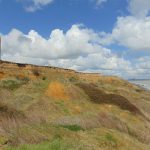
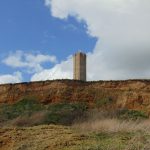
To give you some context my book – Pushed to the Edge: A History of the Naze and Walton Hall – is a history book exploring how community, economy and ecology have interacted at a single, small peninsula in Essex over time. It explores the environmental, landscape and socio-cultural histories of the place as well as how environmental change, sea level rise, climate change and coastal erosion have affected the place and will affect the place in the future.
 Writers will often tell you that they feel like two different people. Firstly, they are a researcher. It is the researcher’s job to sift through and compile information on numerous topics that can be stockpiled away for use at a later time. The researcher is committed, investigative and analytical and must keep an open mind. The researcher will often travel – sometimes great distances – to visit experts or other subjects of interest, places and archives, all the time on the lookout for materials that can be used later by their partner – the writer. Despite the excitement of the research process the researcher often longs to be the writer, who can use their imagination and creativity to bring all the information together.
It is the role of the writer to bring the researcher’s work to life, using the most appropriate words and structuring the sources in such a way that the story being told is relevant and engaging for the eventual reader. The writer will usually find a single place – a sanctum – in which to work. They will return to this place day after day (or in my case every few days) to write. Sometimes the quality of the writing will be good and sometimes, inevitably, it will be poor. The secret however is to keep going. It is always possible to edit and alter later on but at the writing stage one must let the imagination flow and get words down on the page, no matter their quality. After a little while the writer longs to be the researcher again as they are tied to their desk for hours, sometimes encountering blocks and often desiring the new experiences the researcher was able to engage with. They miss the exciting adventures and the opportunities to meet new people and discuss ideas. They sometimes struggle to find the enthusiasm they had when the project began. Nonetheless, when everything eventually comes together and a copy-edited final proof comes through your letterbox everything seems worthwhile.
I should say at this point that I am a non-fiction writer. My one attempt at fiction a few years ago fizzled out and I realised that the arts of fiction and non-fiction writing and the skill sets required are very different! I applaud any of you who engage with the beauty of emptying your imagination on to the page through fiction construction. It is a wonderful thing to do. However, I find that, for me, non-fiction provides a basis in which I can more easily engage with readers. For this is what writing and reading is all about. For a book (or article or blog post for that matter) to be successful the writer must be able to engage with their readership. As a reader I often find that if I can hear the voice of the author in my head then they have done a good job. This is certainly something to bear in mind.
It took me several years and ‘completion’ of various versions of my manuscript before I was sufficiently happy to declare it ‘finished’. I began writing the key chapters in 2006 and it was finally published in 2015. Now, it could have been completed much sooner than this. However, critically over this period (and this was picked up on by Dr Chris Gibson who wrote the foreword for the book), my writing matured and developed significantly. The manuscript I put together during my teenage years was very different to the final manuscript engaged with and developed during and following my degree (BA History; Bristol University). I realise that we develop in many ways throughout our lives and writing is a particular medium that will show this. However, I would certainly encourage those of you who may be undertaking a similar project and are yet to complete a degree, to wait until you have finished your course before ‘finalising’ any manuscript as your entire world view might have changed. University education, particularly the arts, is sometimes attacked as being ‘irrelevant’ in a ‘modern’ age and not preparing students for life. I would argue that the opposite is the case and a university education and experience opens an individual’s eyes to numerous new ideas, views and people. It certainly had a huge influence on me, my writing and my way of seeing the world. As an historian, nuance and balance are critical and having these drilled in to me by my tutors has certainly had wider implications for my writing generally.
If you are thinking about writing a book the key thing to establish first of all is whether there is a market for it. If, like me with Pushed to the Edge, you aim to publish and market the books yourself you need to be clear that you have a defined market and that you can construct a marketing strategy to sell sufficient copies. Similarly, if you aim to have your book published by a conventional publisher (this remains my aim for a future book) you will need to convince them that there is a large enough market for them to publish your book. For me, my book was very niche, albeit with wider implications, and so it made sense for me to self-publish and sell the copies myself rather than persisting with applications to publishers and waiting for the inevitable rejections. The market is simply too small for a publisher to have been interested.
Secondly, you need to be clear about your subject. It often helps if it is a subject that you are passionate about and/or preferably have some expertise in. Your passion will show through in your writing and it will also be easier to fulfil your ‘daily writing’ quota. Fundamentally it will mean you will ENJOY the process more. This is absolutely key. Very few people are able to make a career purely out of writing and often you will be working another (or several other) job(s) so will have to work your writing around these. By having a subject you are really interested in you will find it easier to keep going. This probably goes without saying but the point needs making.
When it comes to the nitty gritty of the writing and research process I would offer ten pieces of advice:
- Be organised and set yourself achievable aims. Self-discipline is a key quality for a writer.
- Set yourself a budget and stick to it! The research process can be expensive otherwise.
- Set yourself a minimum number of words to write each day.
- Develop a good structure and stick to it.
- Give yourself incentives and have little celebrations when you reach key milestones in your manuscript.
- Take time off. It’s important to have a break now and then. Walks and fresh air work well.
- Talk to people about your ideas.
- Save and back up your work! Losing your manuscript doesn’t bear thinking about!
- Keep a record of any correspondence you have had. You will appreciate this later on in the process if you need to contact someone or reference them in your acknowledgements.
- Don’t give up!
Once you have finished the process of writing and are happy with your manuscript it is time to start selling it. Today, there are numerous companies who will print copies of your book on demand and if it makes sense for you to publish it though this means I would wholeheartedly recommend it. For Pushed to the Edge I used CompletelyNovel.com and I was able to publish the number of books that was financially workable in line with my marketing plan as well as having full control over the design. I am fortunate to have a family of designers and so between us designing a front and back cover wasn’t too much of a challenge. I did have to do all the editing and typesetting myself and if I could have afforded to hire the services of a professional type setter I would have done (it would have saved on a lot of time) but for what I wanted, I was able to achieve a good finish.
If you want to go down the conventional publishing line there are I’m afraid no guarantees. Persistence is the secret as well as sending your manuscript to publishers who have previously printed similar work in a similar genre. Many publishers tend to specialise in particular areas, sometimes very niche, so it is likely you will be able to find at least one company that might be suitable. However, prepare for rejections and lack of replies. However, you will have put a lot of work into your book and should be very proud of it so persist and you will (hopefully) get there. Remember that J.K. Rowling received a dozen rejections for Harry Potter and the Philosopher’s Stone before it was published, C.S. Lewis and Agatha Christie were rejected for years before being published and The Tale of Peter Rabbit was rejected so many times Beatrix Potter eventually decidd to self-publish 250 copies – it has now sold 45 million copies.
If you are currently writing or thinking about writing a book I wish you the very best of luck! I’d love to hear about your experiences if you are going through the researching, writing or publishing process. My email is benjamin.eagle@outlook.com.